

Milling Inserts: Buy in Ukraine
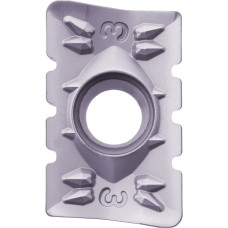
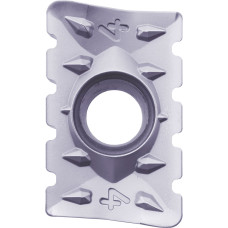
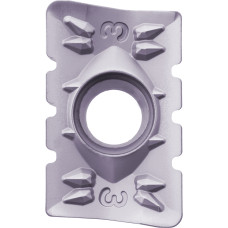
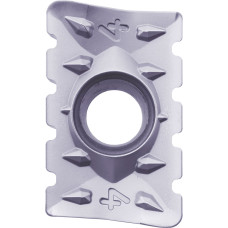
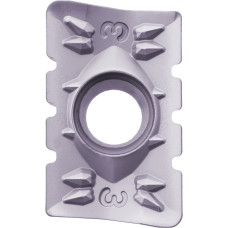
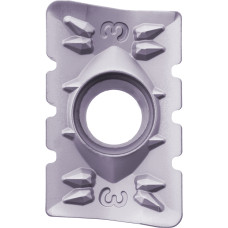
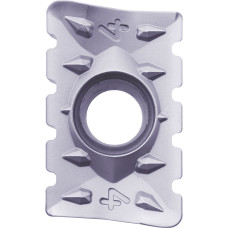
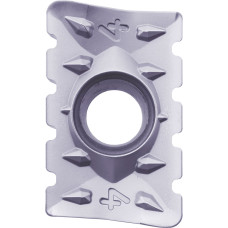
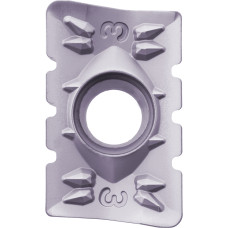
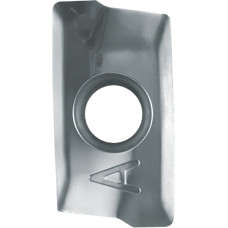
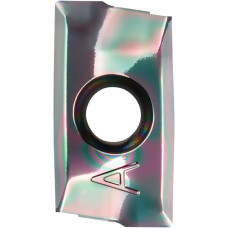
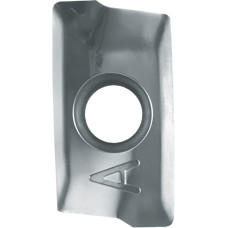
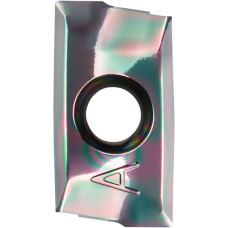
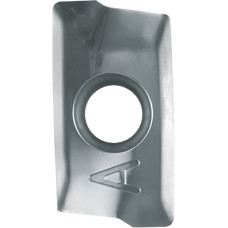
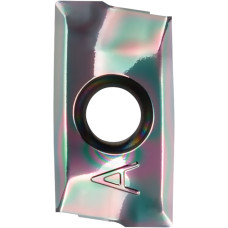
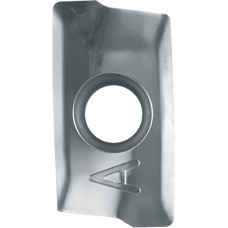
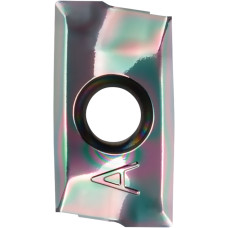
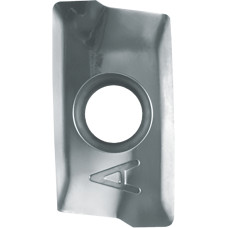
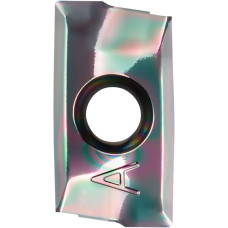
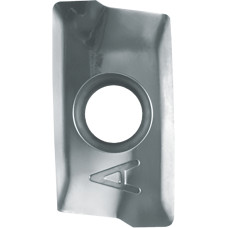
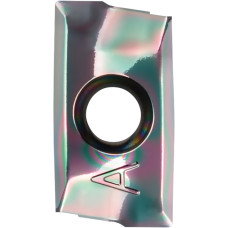
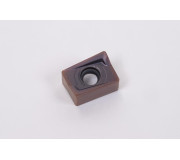
Milling inserts are replaceable carbide cutting elements for face mills, end mills, ball nose mills, and shell mills with mechanical clamping. When an edge wears out, the insert is indexed to another edge or replaced without changing the cutter body. At Abplanalp you can buy inserts with delivery throughout Ukraine.
Insert Manufacturers and Supply Availability
The catalog includes the following manufacturers: Kyocera, ATORN, Palbit, OSG, Haas tooling, Saratools. They offer inserts in various shapes and sizes, with different carbide grades, coatings, and chipbreakers, so you can select an option for a specific material group and type of operation. The "Manufacturer" filter lets you narrow down the selection quickly. Availability and price of individual items change, so check the item status and cost on the product page before ordering.
How to Select Milling Inserts for Your Material and Machining Type
First, determine the ISO group of the workpiece material. For each group, the catalog contains inserts for primary and secondary applications:
- P — carbon and alloy steels;
- M — stainless steels;
- K — cast irons;
- N — aluminum and non-ferrous metals: a sharp edge and positive geometry are required, and DLC coating is often chosen for these materials;
- S — heat-resistant alloys and titanium;
- H — hardened steels.
Next, consider the nature of the machining. For roughing with a large stock allowance and shock loading, choose a strong edge, a larger corner radius, and a chipbreaker for heavy cutting. For finishing, use a smaller radius and a chipbreaker for light cutting. When system rigidity is insufficient, inserts with positive geometry are a better fit.
What Else You Will Need for Milling Inserts
An insert works only together with a matching cutter body, so select shell mills with mechanical insert clamping Along with it: the insert's shape, size, and hand must match the insert pocket. Screws, keys, and other clamping parts can be found in the milling tool accessories Section. If the task calls for rigid solid tooling of small diameter, take a look at solid carbide end mills. For how cooling affects the tool life of carbide tooling, read the article on the effect of coolant on tool life.
Carbide Grades, Coatings, and Insert Hands
The catalog includes inserts in carbide grades PR1825, PR1835, PR1810, PR1535, PR1525, PR1510, CA6535, TN100M, KW10, HC4410, and others. Each manufacturer has its own designation system, so compare grades by their ISO group recommendations and cutting conditions rather than by similarity of codes.
Coating also affects the application. Available coatings include CVD, PVD, DLC, AlTiN, AlTiN + SiN, MEGACOAT, and MEGACOAT NANO EX, as well as CVD-coated ceramic. As a rule, CVD performs well in stable cutting of steels and cast irons, PVD gives a sharper cutting edge, and DLC is intended for non-ferrous materials.
Inserts come in right-hand, left-hand, and neutral versions. Before ordering, check the hand against the cutter body and the cutter's direction of rotation.
Types of Milling Inserts and ISO Designation Breakdown
The catalog includes rhombic (BDMT, BDGT), rectangular (LOGU, LOMU), round (RPMT, ROMU, RPGT, RDMT), square (SPMT, SOMT, SNMU), pentagonal (PNMU), trigon (WNMU), and parallelogram-shaped (APKT, APMT, ADKX) inserts. Here is a breakdown of the designation BDMT11T304ER-JT:
- B — rhombic shape with an 82° angle;
- D — 15° clearance angle;
- M — tolerance class;
- T — hole and chipbreaker present;
- 11T3 — size (edge length and thickness per ISO);
- 04 — 0.4 mm corner radius;
- E — rounded cutting edge, R — right-hand version;
- JT — chipbreaker.
The chipbreaker determines how the chip is formed and evacuated, as well as the load on the edge. Catalog designations vary (GM, GH, GL, FL, JT, SM, and others). For many manufacturers, the letters L and F denote light and finishing cutting, M — medium, H — heavy, roughing. However, the specific application range should be confirmed on the product page.
Comparison of Milling Insert Shapes
The table lists the main shapes from the catalog. The applications are typical; the final choice depends on the cutter body and the material.
| Shape (ISO) | Geometry | Typical application |
|---|---|---|
| BDMT | 82° rhombus, 15° clearance angle | Face milling, shoulders |
| SPMT | 90° square, 11° clearance angle | Face milling, 90° shoulders |
| SNMU | 90° square, 0° clearance angle | Face milling, roughing operations |
| WNMU | 80° trigon, 0° clearance angle | Face milling |
| PNMU | Pentagon, 108° interior angle | Face milling |
| RPMT | Round, 11° clearance angle | Copy and profile milling |
| APKT | 85° parallelogram, 11° clearance angle | Shoulders, face milling |
How to Order Milling Inserts: Price, Payment, Delivery
- Filter the list by manufacturer, carbide grade, shape, size, and chipbreaker, then open the page of the required insert.
- Check the availability status ("In stock", "Made to order") and the minimum order quantity.
- If "Price on request" is shown, click "Request price" — a manager will quote the cost.
- Payment is by bank transfer against an invoice: the manager will send the invoice to your e-mail after the order is confirmed. Settlements are made officially, with financial documents.
- Delivery is by carrier within Ukraine: specify the city and address or the carrier's branch, and the manager will agree on the delivery cost and lead time after the order is confirmed.
Not sure about your choice? Abplanalp specialists will help you select inserts for your material, operation, and equipment.
Frequently asked questions
The third letter of the ISO insert code indicates the tolerance class. Class G is more precise than class M, so in pairs such as LOGU and LOMU, BDGT and BDMT, RPGT and RPMT, the difference lies in the accuracy of the dimensions and the position of the cutting edge. More precise inserts are appropriate where cutting edge runout and surface finish are important, for example in finishing operations. For rough milling, class M is usually sufficient.
Inserts with a zero clearance angle have a stronger cutting edge and withstand shock loads. They require higher cutting power, and the pockets of the toolholder body are usually designed for negative mounting. A positive clearance angle reduces cutting forces and friction against the machined surface, so it is suitable for unstable setups and finishing passes, although the cutting edge is weaker. The clearance angle is determined by the design of the toolholder body, so check its documentation first.
CVD coating is thick and wear-resistant, so it is chosen for steels and cast irons, where the cutting edge operates at high temperatures. PVD coating is thinner and allows a sharper cutting edge to be retained, so it is used for stainless steels, heat-resistant alloys and interrupted cutting. DLC reduces built-up edge, so it is chosen for aluminum alloys and other non-ferrous metals. Check your choice against the ISO group indicated on the insert's product page.
We deliver tools and components throughout Ukraine by carrier. When placing your order, enter the city and the address or carrier branch.
Delivery cost and lead time will be agreed by our manager after your order is confirmed. See the Delivery and Payment page for details.
The payment method is the same for companies and individuals: bank transfer against an invoice. After your order is confirmed, our manager will send the invoice to the email address provided in your order.
All payments are made officially, with the necessary financial documents provided.
Some products have no price on the website — the product page shows "Price on request", and such products cannot be bought online. Click "Request a price" on the product page and a manager will quote it.
You can also contact the sales department, open Monday to Friday from 9:00 to 18:00; see the Contact Us page.